
Is Washington distancing itself from the Kurds in Syria?
Is Washington distancing itself from the Kurds in Syria?
Comment: The United States may be quietly dissociating itself from the YPG in hopes of a closer relationship with Turkey, writes Imad K. Harb
5 min read
15 Nov, 2018
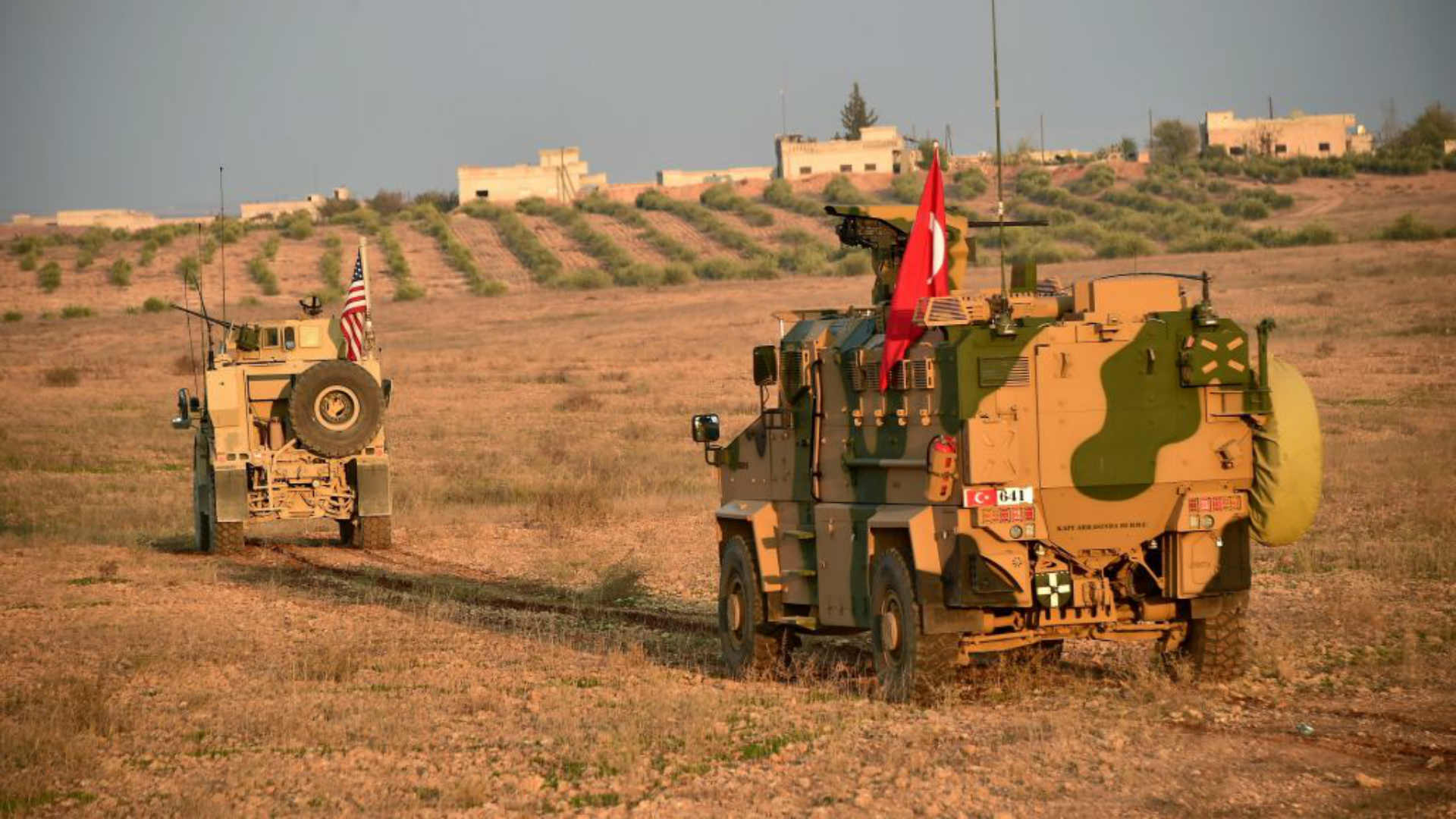
'The United States needs Turkey as an active participant in Syria' [Anadolu]
A very modest warm breeze appears to be wafting over Turkish-American relations after several disagreements cooled them in the years of the Obama administration.
This warming of relations may have a direct result on developments in Syria, where Turkey has been involved since the start of that country's war in 2011.
What has helped this development is the Turkish authorities' release from house arrest of Andrew Brunson, an American pastor who was accused by Turkey of involvement in the July 2016 coup attempt.
Freeing him ended a series of retaliatory actions between Washington and Ankara that have seriously damaged the Turkish economy but also threatened to alienate Turkey from its decades-long American friendship.
Recently, the United States offered a financial reward for information leading to the arrest of three Kurdish militants belonging to the Kurdistan Workers' Party (PKK) - which Turkey considers to be a terrorist organisation.
At the beginning of November, US and Turkish military units began joint patrols in the northern Syrian town of Manbij, where the Kurdish People's Protection Units (YPG) forces are thought to operate.
Turkey considers the YPG to be an affiliate of the PKK and fears that it and its political wing, the Kurdish Democratic Union (PYD), are working toward establishing an autonomous Kurdish region in northern Syria. To Turkey, such a plan is a direct challenge to its national interests, given the large Kurdish minority in its own southeast.
 |
The United States has for years supported the YPG militarily as the backbone of its fight against the Islamic State group |  |
In fact, many soldiers of the 2,000 strong American contingent in Syria are engaged in training the YPG and assorted Arab tribal fighters who have liberated much of the IS-held territories in the Syrian east and northeast. The other American soldiers are deployed at al-Tanf desert base in the southeast on the border with Iraq.
Twitter Post
|
For years, Ankara has demanded that Washington stop aiding the YPG. This has presented the United States with a difficult dilemma of trying to accommodate Turkish demands with its commitment to its Kurdish allies.
But bereft of effective and decisive on-the-ground influence in Syria vis-à-vis Russia and Iran, the United States needs Turkey as an active participant in Syria. And with the fight against IS in Syria almost over, Washington may be quietly dissociating itself from the YPG for a closer relationship with Ankara.
Read more: Turkey and US lift sanctions against each others' ministers
In reality, it is hard to separate the joint patrols in Manbij from the conclusion that American policymakers may have reached: That the relationship with Turkey is too precious to waste, especially in relation to Syria.
This distancing is doubtless awaited by the Syrian regime and its Russian and Iranian sponsors - and all are waiting for a US withdrawal from Syria. And by dissociating, Washington cannot be seen as sacrificing the YPG, which had no qualms earlier this year about opening up to Damascus and coordinating with it in exchange for some autonomy - anathema to Turkey's national interests.
Furthermore, strengthening American-Turkish coordination can be useful in other Syrian matters. For example, Turkey could use American diplomatic assistance in staving off a Syrian-Russian-Iranian assault on Idlib province in the northwest. With close to three million people living there, such an assault could cause a humanitarian disaster on Turkey's border.
Importantly, the United States can assist Turkey in dealing with the armed Syrian opposition concentrated in that province, a sizeable portion of which is composed of fighters belonging to Hayat Tahrir al-Sham (HTS), a formerly al-Qaeda-affiliated jihadist group. The United Nations estimates that 10,000 fighters in the province are HTS militants.
|
For years, Ankara has demanded that Washington stop aiding the YPG | |
While no one should think that Turkey is merely disinterested and charitable in Syria, its intervention there could be a boon for a hapless American policy that, left unrectified, will deprive Washington of any influence in that strategic country.
Finally, and away from Syria, the timing of this warming of American-Turkish relations cannot be ignored. One specific issue stands out - and it is the increased American uncertainty about the steadiness and stability of the Saudi leadership in the aftermath of the decision to assassinate journalist Jamal Khashoggi.
What is ironic in this specific regard is that Khashoggi's murder took place in Istanbul, and none other than the Turkish leadership is in full possession of all incriminating evidence surrounding it.
Imad K. Harb is the Director of Research and Analysis at Arab Center Washington DC.
Opinions expressed in this article remain those of the author and do not necessarily represent those of The New Arab.
Follow us on Twitter: @The_NewArab
More in Opinion


