
Arafat and I: His life as I experienced it
Arafat and I: His life as I experienced it
Arafat was a principled but pragmatic leader who embodied his people's national aspirations. He was right at times and wrong at others. But his uniqueness as the exceptional, cunning and brave leader of a nation is not in question.
4 min read
08 Nov, 2014
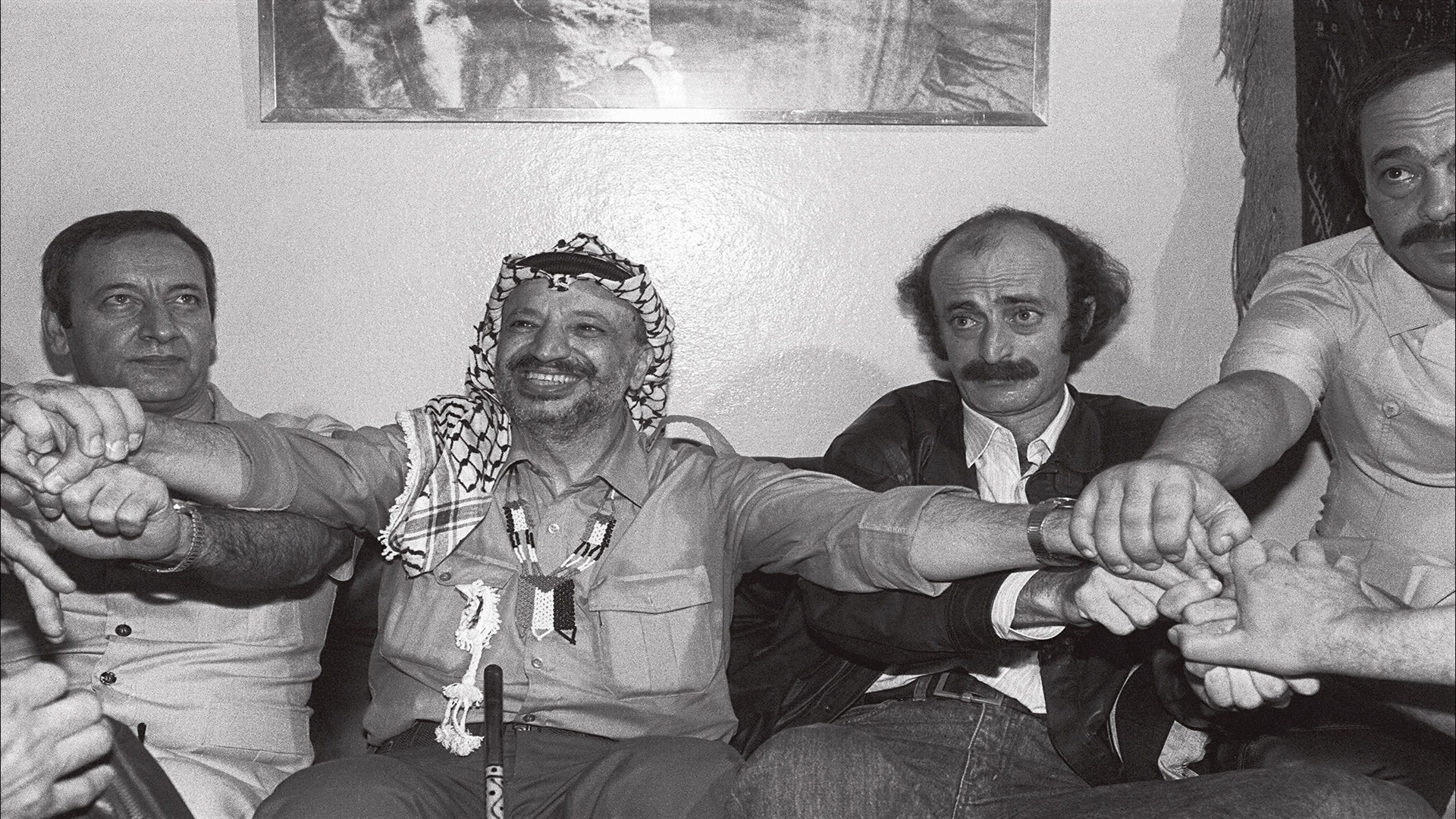
Arafat in Beirut 1982 (AFP)
When my nationalist consciousness began to stir even before I was ten years old, Arafat’s image, with his keffiyeh and military fatigues, his gun strapped to his side, was all the role model I and many of my generation needed.
We did not need legends from times gone by when we had a real living legend, one who looked like our fathers and forefathers and who bore a traditional name like them: Abu Ammar.
I do not remember how the state of collective awe for the man who would go on to lead Palestinians for decades started. But I cannot forget our favourite game after we heard of him: with wooden rifles we had made ourselves, we recreated the stories we had heard from grown-ups of Fatah’s heroic operations against Israel. We used to play this game in the alleyways of refugee camps and in the poor streets of Zarqa in Jordan.
The legend was slightly diminished after Yasser Arafat left Jordan defeated in 1970, losing his battle with King Hussein. In my early youth, I came across the proscribed Jordanian/Palestinian left and read their literature, which described the leadership of Arafat as right-wing bourgeoisie, compromising the rights of Palestinians to historical Palestine, adopting a political program that settled for a state in the West Bank and Gaza.
The debate over the Palestinian Liberation Organisation’s (PLO) interim program fuelled criticisms of Arafat’s policies, while he repeatedly talked about what he called “revolutionary democracy in a forest of rifles”. Arafat worked toward a historic political settlement with Israel. He did so even after it invaded southern Lebanon and besieged Beirut for eighty days, forcing him and the PLO to leave - with nothing but their personal weapons - for Tunisia, Algeria and Sudan.
We did not need legends from times gone by when we had a real living legend, one who looked like our fathers and forefathers and who bore a traditional name like them: Abu Ammar.
I do not remember how the state of collective awe for the man who would go on to lead Palestinians for decades started. But I cannot forget our favourite game after we heard of him: with wooden rifles we had made ourselves, we recreated the stories we had heard from grown-ups of Fatah’s heroic operations against Israel. We used to play this game in the alleyways of refugee camps and in the poor streets of Zarqa in Jordan.
The legend was slightly diminished after Yasser Arafat left Jordan defeated in 1970, losing his battle with King Hussein. In my early youth, I came across the proscribed Jordanian/Palestinian left and read their literature, which described the leadership of Arafat as right-wing bourgeoisie, compromising the rights of Palestinians to historical Palestine, adopting a political program that settled for a state in the West Bank and Gaza.
The debate over the Palestinian Liberation Organisation’s (PLO) interim program fuelled criticisms of Arafat’s policies, while he repeatedly talked about what he called “revolutionary democracy in a forest of rifles”. Arafat worked toward a historic political settlement with Israel. He did so even after it invaded southern Lebanon and besieged Beirut for eighty days, forcing him and the PLO to leave - with nothing but their personal weapons - for Tunisia, Algeria and Sudan.
 |
Arafat realised he would either become a glorified security guard for Israel or a martyr for his cause. |
History presented an opportunity to restore the legend, and Palestinians talked about their unprecedented endurance in the face of the Israeli military machine and the bravery of Arafat in the face of then Israeli minister of war Ariel Sharon’s attempts to kill him.
Mahmoud Darwish later wrote his seminal poem In Praise of the High Shadow:
“It is only another migration
So don’t write your final will
Failure has fallen, while you rise”
However the “High Shadow” did not remain so for long.
Only a year later, Palestinians faced serious divisions as a result of disagreements with Arafat and about him. At the time, I had just taken my first steps as a journalist and joined tens of Palestinian writers and journalists in combatting what we called “the policy of squandering [Palestinian rights] employed by the corrupt right-wing leadership”.
At the end of 1987, the Palestinians of the West Bank and Gaza started their intifada, which forced the unification of the PLO and repositioned Arafat as an influential player as he succesfully exploited the Intifada. Then he signed the Oslo Accords despite strong objections from a broad range of Palestinians. I contributed to this chorus of criticism, as a journalist and political analyst. Some went so far as to call him a traitor.
Arafat became a president without a country and soon realised the red carpet he walked on to the sound of the Palestinian national anthem would lead to one of two things: either he would become a glorified security guard for Israel, or he would die. His legendary image was slowly restored to its former glory when he chose his end as a martyr, and his defiance of the Israeli tanks that surrounded his compound, raising the victory sign as he boarded the helicopter that transported him into exile and death in Paris ten years ago. His remains now rest in Ramallah.
He was right at times and wrong at others. But his uniqueness as the exceptional, cunning and brave leader of a nation is no longer in question. This is perhaps the reason he was assassinated.
Opinions expressed in this article remain those of the original author and do not necessarily reflect the opinions of al-Araby al-Jadeed, its editorial board or staff.
This is an edited translation from our Arabic website.
More in Opinion


