
 English
 French
 Spanish
 German
 Italian
Greece's decision to spend roughly €3 billion on an Israeli-built integrated air-defence network is about more than adding another layer of protection to its armed forces.
The proposed “Achilles Shield” comes as Greece’s relationship with Turkey worsens, while Athens deepens ties with Tel Aviv.
Greek proponents see Israeli technology as a way to modernise Greece's defences against drones, aircraft, and missiles. Critics, however, warn that the deal could bind Athens more closely to Israel at a time when Tel Aviv is increasingly isolated worldwide because of its rogue actions in Gaza and elsewhere.
There are also questions to raise about whether systems developed for Israel’s very different geography and security environment are right for Greece.
The result is a major defence purchase with implications well beyond the battlefield. The deal could significantly impact Greece’s relationships with Turkey, Israel, the United States, and fellow European Union (EU) members.
A critical question relates to whether Athens is buying an integrated shield for its territory, or a deeper strategic commitment to Israel.
Turkey the central factor in Greece's defence planning
For all the uncertainty surrounding Greece's security environment, Turkey remains the central reference point in Athens's defence planning. The two NATO members have spent decades at odds over the Aegean, Cyprus, maritime boundaries, and competing territorial claims, even as periods of diplomatic calm have periodically reduced tensions.
Tony Rigopoulos, an Athens-based journalist and political analyst, sees the Greek-Turkish rivalry as the most important explanation for this historic defence deal.
“Greece’s main and long-lasting threat comes from Turkey; even in periods when tensions were low, Greek governments have been using the ‘Turkey card’ to justify expensive defence deals,” he told The New Arab.
“In the case of the Achilles Shield deal, the conservative government of the ‘New Democracy’ party and its friendly media exhibited very low interest in analysing any potential threat from Iran and focused once more on Turkey.”
As Rigopoulos explained, comments from Turkish officials about “taking” Greek islands and the upcoming vote on the “Blue Homeland” law in Turkey’s parliament are, from Athens’ perspective, a grave threat to Greece’s sovereignty.
Dr George Tzogopoulos, a lecturer at the European Institute of Nice (Cife), offers a less exclusively Turkey-focused interpretation. In his view, Greece is modernising its armed forces because its strategic environment has become more unpredictable, rather than because Athens expects an imminent confrontation with Turkey.
That distinction matters. Greece may regard Turkey as its principal long-term military challenge while recognising that the immediate security environment has also changed. The US-Israeli war on Iran, for example, creates risks for Greece even though Athens maintains positive relations with Tehran.
Greece hosts important American military facilities and is closely aligned with Washington, potentially making it vulnerable to conflicts in which it is not a direct participant.
Stavroula Pabst, an independent analyst, similarly cautions against reducing the deal to Greek-Turkish tensions. While Athens is concerned about Turkey’s expanding military capabilities, she points out that both countries have repeatedly expressed an interest in managing their disputes through dialogue.
“Achilles Shield” may therefore be less a preparation for war with Turkey than an attempt by Greece to hedge against a range of threats.
“I am wary of saying this is primarily driven by Turkey but am forced to acknowledge this is a major factor for Athens. I believe Athens feels threatened by Turkey’s advancements in defence as of late, where Turkey is putting significant effort into fielding weapons like ICBMs, and armed drones,” she told The New Arab.
“But even as this occurs, I also want to point out that there are reasons to believe level heads will prevail here: Greece and Turkey have repeatedly made it clear that they would like to work on their grievances with each other [with the Cyprus issue being an example] among themselves. I don't know if these weapons deals will change that,” added Pabst.
Nevertheless, the Turkish question remains unavoidable. The more sophisticated Ankara’s weapons become, the greater the pressure on Athens to ensure its own defence apparatus does not fall behind. “Achilles Shield” can therefore be understood both as a response to Turkey and as part of a broader effort to preserve Greek options in a less predictable regional environment.

Can Israel's air-defence model work across Greece's islands?
Israeli defence companies have been able to market their systems to foreign governments on the basis that they have been used repeatedly in real-world conflicts, including against drones and missiles.
For Greece, which is seeking to rapidly modernise its defences, that experience is potentially a powerful selling point. Dr Tzogopoulos argues that Israel’s technological expertise and battlefield experience are precisely what make its systems attractive, even though many details of “Achilles Shield,” including the precise systems to be deployed and their locations, remain unknown.
Dr Ioannis E. Kotoulas, an adjunct lecturer in geopolitics at the University of Athens, similarly argues that Israel’s battle experiences are particularly valuable for Greece because of limitations within Europe itself.
“Israel’s battlefield experience and technical expertise, especially concerning air and missile defences, is very important for Greece since the EU has not yet managed to develop similar levels of technical assistance and suffers from bureaucratic obstacles. This is a fast way to obtain advanced defence capabilities,” he told The New Arab.
But the meaning of “battle-tested” is worth addressing. Israel’s recent experience against Iran does not necessarily demonstrate that its air-defence architecture could independently withstand a comparable attack.
In Rigopoulos’ assessment, Israeli defences required substantial assistance from the United States and other allies to deal with large numbers of Iranian missiles and drones. He also points to a fundamental difference between Israel and Greece’s environments.
Turkey and Greece share land and maritime borders, while Iran and Israel are separated by thousands of miles and several countries. Turkey’s ability to produce large numbers of relatively inexpensive drones and missiles could therefore present a different challenge from the one for which Israeli systems were designed.
Geography creates another complication. Greece’s territory is dispersed across hundreds of islands, with many in the Aegean and some considerably closer to the Turkish mainland than to mainland Greece. A centralised architecture that makes sense for Israel may require significant adaptation to work across Greece’s fragmented territory. Some Greek defence specialists question whether a network of smaller, geographically distributed systems might be more appropriate.
This highlights the danger of treating combat experience as a guarantee of effectiveness in a different strategic environment. The relevant question is whether Israeli systems can be integrated into Greece's existing defences and adapted to its geography and Turkey’s military capabilities.
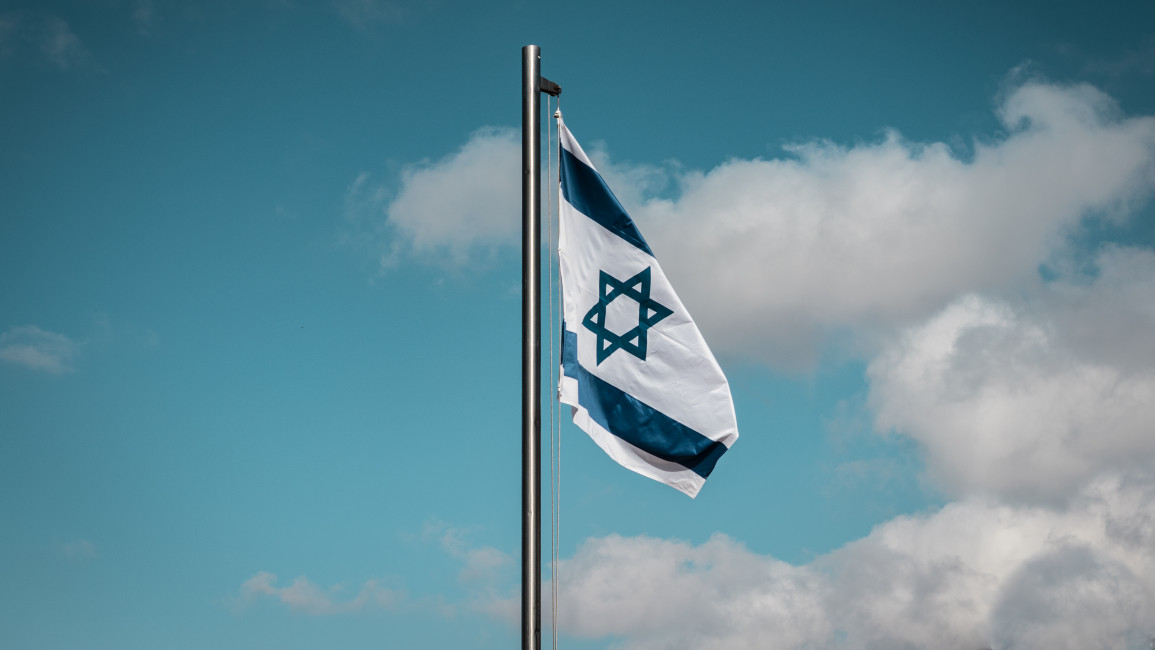
Greece has presented the project as an integrated national air-defence network capable of responding to ballistic missiles, aircraft and drones. However, the precise architecture, deployment timetable and relationship between its various systems have not been fully disclosed.
The system’s effectiveness will therefore depend heavily on interoperability. Greece already operates a mixture of American, European and other weapons systems, and the value of a new shield will depend on how effectively those systems can communicate.
Israeli technology can be interoperable, but the details of Greece’s plans have not been made public. The same uncertainty applies to command and control. An integrated network could give Greek commanders a more comprehensive picture of incoming threats and allow different defensive systems to respond in coordination. However, its effectiveness will ultimately depend on how much information can be shared and how quickly decisions can be made.
There is also a more fundamental question about technological sovereignty. Rigopoulos has drawn attention to comments by Moshe Patel, director-general of Israel’s Missile Defence Organisation, concerning Greece’s access to the system’s source code and Israel’s continuing role in support and maintenance.
If Athens lacks full access to the underlying software and remains dependent on Israel for substantial technical support, the meaning of “national” control over the shield becomes more complicated.
Foreign military systems routinely require supplier support, so dependence is not unusual. But the more central “Achilles Shield” becomes to Greece’s national defence, the more significant that dependence could become.
That question also illustrates why the deal is more than a conventional arms purchase. An integrated defence architecture involves software, command systems, training, maintenance, upgrades and long-term technical cooperation.
If “Achilles Shield” becomes deeply embedded in Greece's military infrastructure, Israel could consequently become an indispensable partner in Greek national defence for decades. The strategic significance of the agreement may therefore lie as much in the relationship it creates as in the weapons Greece receives.
Greece faces a growing divide over its ties with Israel
The strategic case for closer cooperation with Israel exists alongside a significant political problem: Greek public opinion toward Israel has deteriorated sharply amid the Gaza genocide.
Polling data from February-May 2026 shows 65 percent of Greeks expressing an unfavourable view of Israel, while there have been hundreds of pro-Palestinian demonstrations across the country since October 2023.
Pabst expects substantial opposition to “Achilles Shield,” arguing that the Greek public has broadly opposed closer cooperation with Israel because of its conduct in Gaza. The contrast between public sentiment and government policy is striking. While Athens has continued to deepen its relationship with Israel, many Greeks appear increasingly uncomfortable with a country whose technology will now play a significant role in their national defence.

Yet, opposition to Israel does not necessarily translate into opposition to the defence relationship. Dr Tzogopoulos makes an important distinction between attitudes toward the current Israeli government and perceptions of Israel as a useful strategic and technological partner.
“Greek citizens are concerned about the future trajectory of Greek-Turkish relations. In that regard, closer collaboration with Israel, which goes beyond the Achilles Shield, is considered important in the context of the national interest,” he told The New Arab.
“The image of the current Israeli government in Greece is being deteriorated because of the Gaza war, but this is different from considering Israel a partner in the process of modernising armed forces - both at the political and public opinion level,” noted Dr Tzogopoulos.
Rigopoulos similarly describes the relationship as something that parts of Greek society may regard as a “necessary evil”, essentially constituting a partnership that is politically uncomfortable but difficult to reject if believed to strengthen Greece’s security.
That tension could become increasingly important as the defence relationship deepens. Arms agreements are unusually durable forms of foreign policy, involving large financial commitments and creating networks of military, technological, and institutional cooperation that can last for decades.
Pabst argues that this could eventually make it more difficult for Greece, or even other European governments, to distance themselves from Israel or hold its government accountable for its actions. The more Greek defence planning depends on Israeli technology, the greater the political cost of disrupting the relationship.
'Achilles Shield' entrenches Greece's partnership with Israel
Domestic politics aside, “Achilles Shield” is the latest step in a Greece-Israel relationship that has deepened for more than a decade, alongside increasingly close ties with Cyprus. Joint military exercises, energy cooperation, and defence links have given the relationship a strategic dimension, while deteriorating Israeli-Turkish relations have made the Greek-Israeli partnership more conspicuous.
From Athens' perspective, cooperation with Israel offers access to advanced military technology while strengthening ties with a regional actor whose interests overlap with Greece’s on several issues. “Achilles Shield” is therefore not an isolated procurement decision but another piece of a broader Eastern Mediterranean security network.
Dr Kotoulas describes that network in more explicitly strategic terms, arguing that “Achilles Shield is an important upgrade of Greek defence capabilities and functions as a factor of deterrence for any Turkish regional aspirations.” He also noted that “the network of Greece-Cyprus-Israel in the Mediterranean creates an important military counterweight to any regional hegemonic attempts”.
It would nevertheless be premature to describe this network as a formal anti-Turkish alliance. Dr Tzogopoulos rejects the idea that regional alliances are necessarily forming, arguing instead that states are building partnerships around overlapping interests.
Israel’s disagreements with Turkey are also different from Greece's: Israel's disputes with Ankara centre heavily on Syria and the Palestinian question, while Greece's concern the Aegean, maritime boundaries and Cyprus.
“Israel will not help Greece in a Greek-Turkish crisis,” he told The New Arab, adding that he will “not be surprised if Israel and Turkey will be able to better manage their relationship in the future”.
Even without a formal alliance, however, defence agreements, exercises, intelligence relationships, and military technology can alter perceptions of the regional balance of power. “Achilles Shield” adds another layer to that process, making Greece and Israel more deeply connected militarily and giving Turkey another reason to watch their relationship closely.

The implications of “Achilles Shield” extend beyond Greece, Israel, and Turkey. For the United States, stronger Greek air defences are broadly compatible with Washington's interest in strengthening the military capabilities of a key ally on NATO's southeastern flank.
At the same time, Washington has its own defence industry to consider, and greater Greek reliance on Israeli systems could mean fewer opportunities for American weapons manufacturers. Greece’s broader modernisation strategy, which also involves military cooperation with the United States, France, and Italy, suggests that Athens is attempting to diversify its partnerships rather than replace one major supplier with another.
Dr Kotoulas sees the strategic relationship from an Israeli perspective as even broader. “Greece along with Cyprus function as the strategic depth of Israel in the Eastern Mediterranean,” he told The New Arab.
For NATO, the equation is similarly complicated. A more capable Greek military could strengthen the alliance's southeastern defences, particularly against drones and missiles. But “Achilles Shield” also raises questions about interoperability and dependence on a non-NATO supplier.
Those questions become more significant if the Israeli system is eventually integrated deeply into Greece's wider command-and-control infrastructure. The system’s value to NATO will depend not only on what it can intercept, but also on how effectively it can communicate with the alliance's existing networks and other weapons systems.
The EU faces a different dilemma. Greece's growing dependence on Israeli defence technology comes at a time when European governments remain divided over Israel's conduct in Gaza. Pabst's concern is that arms agreements can create relationships that are much harder to unwind than ordinary diplomatic partnerships.
If Israeli technology becomes critical to Greek or wider European security, governments seeking to place political or economic pressure on Israel could face an additional constraint: the practical consequences of disrupting an increasingly important defence relationship.
Turkey, meanwhile, is likely to view the deal with suspicion even if it does not regard “Achilles Shield” as evidence of an imminent Greek-Israeli military alliance. The system could contribute to an arms competition in the Eastern Mediterranean if Ankara concludes that Greece is acquiring capabilities specifically intended to offset Turkish military advantages.
Dr Tzogopoulos, however, stresses that conflict is not inevitable. Greek-Turkish communication channels remain open, and both countries have an interest in preventing disputes from escalating into a military confrontation.
The United Arab Emirates and other regional actors will also be watching the Greece-Israel relationship, particularly against the backdrop of the intensifying US-Iran confrontation. But perhaps the most important geopolitical implication is the one that is easiest to overlook, which is the fact that “Achilles Shield” could make Athens’ relationship with Tel Aviv substantially more difficult to reverse.
Once a country relies on another state for critical military technology, maintenance, upgrades, and expertise, the relationship acquires an institutional momentum of its own. Therefore, the significance of the deal may lie in the possibility that Israel is becoming embedded in the architecture of Greek national defence.
What exactly is Greece buying with 'Achilles Shield'?
“Achilles Shield” is ultimately difficult to understand as a response to any single threat. Turkey remains the most important long-term concern in Greek defence planning, but the US-Israeli war on the Islamic Republic has demonstrated broader risks arising from Greece’s position in a volatile region and its close relationship with Washington.
At the same time, the system’s suitability for Greece remains tied to unanswered questions about geography, interoperability, effectiveness, and technological sovereignty.
What is clearer is that the €3 billion project represents more than a conventional arms purchase. It is another step in Greece's military modernisation and toward a deeper, potentially more durable strategic relationship with Israel. That relationship may provide valuable technology and capabilities, but it also creates dependencies with political consequences well beyond the battlefield.
The central question, then, is what kind of security architecture Greece is building, and how much of that architecture is Athens prepared to place in the hands of a foreign partner seen throughout much of the world as a rogue state guilty of genocide?
In an Eastern Mediterranean already defined by overlapping rivalries and shifting partnerships, the answer could prove highly complicated.
Giorgio Cafiero is the CEO of Gulf State Analytics.
Follow him on Twitter: @GiorgioCafiero
Edited by Charlie Hoyle
Related Articles


